Compare the complete pavement
Concrete and asphalt are both used for driveways, but comparing only the visible surface leaves out much of the decision. Supporting ground, drainage, vehicle loads and construction quality affect both. A material name is not a complete specification.
For a fair comparison, keep the intended footprint and use the same. A proposal for a new surface over retained material is not directly comparable with one that removes the existing driveway and corrects the support. The difference in scope can be more important than the difference between the paving materials.
Concrete slab
A concrete driveway uses a slab whose design and preparation must suit the intended use. Joint layout, finishing and curing are important parts of the work. Concrete develops its properties through hydration, the reaction between cement and water, so protecting moisture and temperature after placement is part of construction.
For a new footprint, our concrete driveway installation page explains the layout and preparation decisions. For an existing slab, the first question is whether the project will retain, repair or remove it. Choosing concrete again does not require accepting the old footprint unchanged.
Hot-mix asphalt
Hot-mix asphalt combines aggregate with asphalt binder and is placed and compacted as pavement. It is not equivalent to a bagged cold-patch repair material. The Washington Asphalt Pavement Association's residential driveway guidance distinguishes hot-mix construction from cold-mix repairs and emphasizes compaction.
That regional guidance explains construction principles; it does not set Amarillo driveway specifications. It is useful here because it prevents a misleading comparison between a fully constructed concrete slab and an asphalt repair product doing a different job.
Match the material discussion to the parked loads
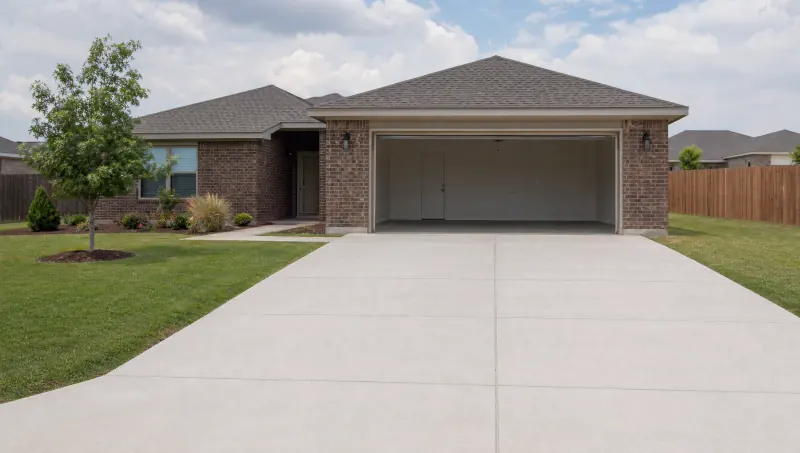
Describe what will actually use the driveway. Everyday cars, a regularly parked heavier vehicle and concentrated loads from parked equipment raise different design questions. Neither material should be selected on the assumption that every residential driveway carries the same loads.
Temperature and stationary turning
The Wisconsin Asphalt Pavement Association's owners guide explains that asphalt binder changes stiffness as temperatures change. It notes that stationary steering can scuff a surface, particularly early in its life or in certain weather conditions. That behavior belongs in a discussion of use and care, rather than being treated as proof that all asphalt driveways are unsuitable.
Concrete has its own movement considerations. Shrinkage and changes in temperature can create stresses, which is one reason a slab needs an appropriate joint plan. A concrete driveway is not made immune to cracking by describing it as rigid or reinforced.
Support and edges
A pavement's edges and supporting layers matter as well as its center. When a proposal assumes that vehicles will stay within a particular area, using an unsupported edge or adding a heavier load can change the conditions it was designed around.
For concrete, review thickness and reinforcement together with the supporting ground. For either material, a thicker-looking surface is not evidence that the preparation beneath it is suitable. The scope should identify the intended use before it promises a finished result.
Compare maintenance as a set of tasks
Neither option should be described as maintenance-free. The useful question is what care the proposed surface and surrounding construction need, and which tasks would fall to the property owner after the work is complete.
Asphalt edges, spills and surface treatment
The Wisconsin guide discusses keeping edges supported, addressing cracks and managing vehicle-fluid spills. It also explains that sealing treatment needs appropriate timing and that a sealed surface requires subsequent maintenance. These are practical tasks to include in the comparison rather than a basis for assigning a universal annual cost.
A fixed resealing interval is not established here for Amarillo. Product choice, surface condition and the proposed treatment matter. A maintenance plan should identify the treatment and its purpose rather than use the word seal as if it describes every repair.
Concrete joints and surface condition
For concrete, keep the distinction between a surface treatment and a slab repair. A worn face, a damaged joint edge and a displaced panel call for different assessments. Resurfacing does not rebuild support beneath the concrete, and filling a visible line does not necessarily resolve the movement that created it.
Our repair-or-replace guide separates those remedies. It is more useful to compare the condition each remedy addresses than to assume that either paving material will never need work.
Water must leave the paved area
Drainage remains important whichever material is chosen. Finished elevations must relate to the house, garage, street and adjacent surfaces. A new paving material does not automatically correct an unsuitable drainage path.
Where an existing driveway already holds water, include the required level changes in both material proposals. Otherwise one price may include correction while another preserves the same low area beneath a new surface.
Compare written scopes for the same footprint
Use a short comparison sheet to hold the project assumptions constant. List the area, existing material to remove, preparation, drainage changes, intended vehicles and street connection. Then identify how each proposal addresses those items.
| Decision | Compare in both proposals |
|---|---|
| Starting condition | New ground, retained pavement or complete removal |
| Supporting layers | Preparation and correction included before paving |
| Use | Expected vehicles, parking positions and access needs |
| Construction | Specified material, placement and finishing requirements |
| Aftercare | Traffic restrictions and maintenance instructions for that work |
Do not use a regional trade association's marketing lifespan or a contractor's advertised starting price as the expected result for your property. This guide does not establish a local price winner, a guaranteed service life or a whole-life cost advantage for either material.
Opening the driveway to traffic is another project-specific comparison. Conventional concrete and a proprietary repair product do not share the same instructions, and asphalt construction should not be assigned a reopening time taken from a concrete guide. Keep the actual construction method attached to the access plan.
Decide which scope to investigate next
If the existing footprint is suitable but the slab and support need rebuilding, start with concrete replacement. If the goal is more parking, compare the retained surface and new area before deciding whether to widen or replace the whole driveway.
Use the estimate comparison guide to identify missing scope items. This website accepts concrete project inquiries; it does not establish an asphalt service offer. A concrete driveway inquiry should describe the result you want and the existing surface so the proposed work is clear from the beginning.